Textured Floral: Elegant & Eye-Catching
First Impression: Premium, Balanced, and Booth-Ready
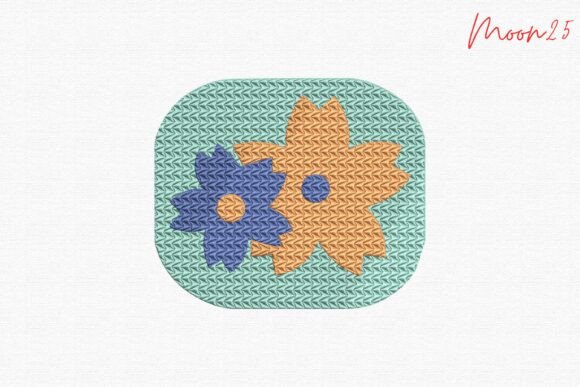
As an embroidery designer who’s prepped over 200 craft fair booths in the past decade, my first thought on Textured Floral is simple: it reads as premium at a glance. Royal blue and golden yellow aren’t just bold—they’re intentional, confident, and instantly legible against that soft green stitched background. This isn’t a “cute” or “farmhouse” floral—it leans elegant and modern, with enough visual texture to feel handmade without looking busy. The zigzag satin pattern adds subtle movement and depth—critical when customers are scanning your table in under three seconds.
Where Textured Floral Shines on Craft Fair Products
Tote bags: Perfect for center-front placement (8–10" wide). The two-flower composition balances beautifully across the bag’s curve, and the color contrast pops even from 6 feet away—no squinting required. Ideal for boutique makers wanting a signature look without overwhelming the fabric.
Aprons: Works exceptionally well above the pocket or centered on the bib. The soft green background mimics natural linen or canvas tones, making Textured Floral feel like it belongs—not applied. Customers associate this kind of harmony with quality handmade product.
Tea towel embroidery: A standout. The design’s moderate scale (neither too dainty nor oversized) anchors the towel without competing with its weave. Royal blue thread catches light beautifully on cotton terry, while golden yellow reads clearly—even on slightly textured towels.
Embroidered patches: Highly adaptable. At 3–4" wide, Textured Floral retains clarity and charm. Its clean outer shape and defined flower forms make it ideal for iron-on or sew-on patches sold as small shop product or add-ons in Etsy bundles.
Pillow covers & pouches: Delivers instant visual lift. On neutral linen or oatmeal twill, the royal blue and golden yellow read as luxe accents—not loud. Great for gift-ready handmade items where perceived value matters more than size.
Caps & curved surfaces: Use caution. While the design’s symmetry helps, the zigzag satin fill may compress unevenly on tight curves. Test on scrap baseball caps first—and consider simplifying stitch density in the flower centers if distortion occurs.
What Makes Textured Floral Sell—Beyond the Stitch
This isn’t just another machine embroidery design—it’s a *booth magnet*. At craft fairs, customers pause longest for designs that communicate mood and craftsmanship in one glance. Textured Floral does that: elegant but approachable, detailed but not fussy. It photographs cleanly for Etsy listings and printable mockups—no retouching needed. The color story (royal blue + golden yellow + soft green) is both seasonal and timeless, fitting spring markets and holiday gifting alike.
For digital sellers, Textured Floral strengthens brand consistency. As a Single Flowers Plants design, it slots neatly into collections—pair it with minimalist leaf motifs or monochrome stems for cohesive design assets. And because it avoids tiny details or fine lettering, it scales reliably across product types. No need to create five versions for five sizes.
Practical Production Notes Every Embroidery Designer Should Check
- Test on scrap fabric first. Especially with zigzag satin fills—thread tension and fabric stretch can shift texture dramatically.
- Verify thread contrast. Golden yellow on dark fabric? May mute. Stick to light-to-mid tone bases unless you’ve tested brightness retention.
- Review spacing and stitch density. Dense areas (like flower centers) may require medium-weight cutaway stabilizer on lightweight fabrics—or tear-away + topping on textured towels.
- Confirm hoop size compatibility. If the design exceeds 5x7", double-check your commercial embroidery setup—and whether your target products (e.g., kids’ caps or petite pouches) can accommodate it.
- Create at least one real mockup. A finished tote bag or tea towel tells you more than any digital preview: Does the green background recede or compete? Do the flowers “lift” off the fabric? Does it feel special in hand?
- Compare fabric colors side-by-side. Royal blue thread looks richer on ivory than on ecru; golden yellow glows on oat but dulls on charcoal. Swatch before bulk production.
- Confirm commercial licensing. If selling finished products (not just the embroidery file), ensure your license permits resale of physical goods—especially for Etsy seller or small shop product use.
Careful-Use Considerations for Maximum Clarity
Avoid shrinking Textured Floral below 2.5". Tiny details in the zigzag satin pattern lose definition—and royal blue and golden yellow begin to visually blend on dark or highly textured backgrounds. Also avoid dense, napped fabrics (like heavy fleece or thick terry) unless you’ve stabilized aggressively: stitch density can cause puckering or thread breakage. On curved cap surfaces, expect slight compression in petal edges—consider simplifying inner fills if clarity suffers. And never assume the soft green background will read the same on every fabric: test dye-lots and weaves before committing to 50+ units.
Why Textured Floral Strengthens Your Handmade Product Line
In a sea of generic florals, Textured Floral stands out by balancing artistry and wearability. It elevates a simple tote bag into a giftable handmade item. It turns an apron into a conversation starter. It gives your booth display cohesion—especially when repeated across tea towels, patches, and pillow covers in the same refined palette. For creative entrepreneurs, that consistency builds trust. For buyers, it signals intentionality: this wasn’t picked from a free bundle—it was chosen, tested, and made to last.
Bottom line? Textured Floral isn’t just another embroidery file. It’s a versatile, high-perception asset—ideal for craft fair sellers who want elegance without complexity, and for digital sellers building a recognizable, scalable collection in the Embroidery category.