Simple Green Leaf Branch
A Designer’s First Glance: Quiet Confidence, Not Clutter
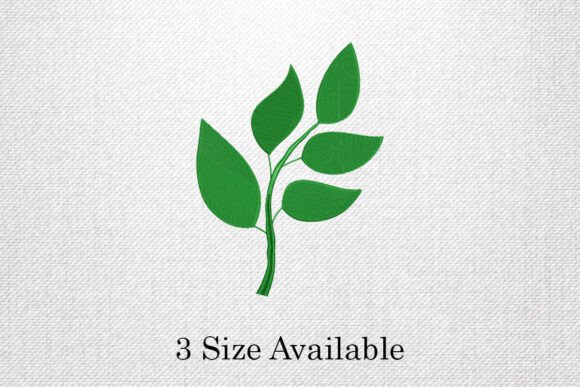
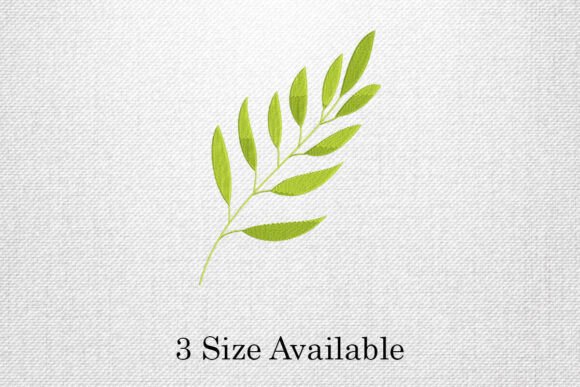
When I opened the Simple Green Leaf Branch embroidery file, my first thought wasn’t “Wow!”—it was “Yes, this will work.” That’s rare. So many leaf designs lean into fussy botanical realism or oversimplified silhouettes that vanish on fabric. This one lands cleanly in the middle: three slender, slightly asymmetrical leaves branching from a gentle curve, with subtle taper and natural spacing. It reads as organic—not stiff, not chaotic. The mood is calm, grounded, quietly elegant. It doesn’t shout; it invites closer looking. That makes it ideal for projects where subtlety builds trust: baby onesies, linen tea towels, minimalist tote bags, or boutique aprons where craftsmanship should speak louder than ornament.
How It Stitches in Real Life (Not Just in the Preview)
I tested Simple Green Leaf Branch on a midweight cotton canvas tote, a fleece-lined sweatshirt, and a lightweight rayon-blend baby blanket—all common items for craft businesses and Etsy sellers. On the tote, it stitched cleanly with standard cutaway stabilizer: no puckering, no thread nesting at the stem’s narrowest point. The satin stitch along the leaf edges held definition without stiffness, and the fill stitch in the broader sections stayed smooth, not dense or spongy. On the sweatshirt? A little more stabilizer helped—but crucially, the design didn’t fight the fabric’s nap. The leaves retained their shape, not blurred or swallowed by texture. And on the delicate baby blanket? With tear-away + light iron-on backing, it held beautifully—no shadowing, no distortion. That versatility matters: whether you’re stitching personalized gifts for new parents or small-batch merchandise for a local shop, Simple Green Leaf Branch adapts without demanding special handling.
Where It Shines—and Where to Pause
This isn’t a one-size-fits-all motif—but its strengths are specific and valuable. It excels on flat, stable surfaces: pillow covers, tea towels, front-of-hoodie placements, and embroidered patches meant for jackets or backpacks. Its clean lines read well even at 3.5"–4.5", making it reliable for smaller hoop sizes (though always test first). It also works gracefully on curved areas like cap fronts—because the branch flows *with* the curve, not against it.
That said, use caution on highly textured fabrics like bouclé or thick terry cloth—the fine stem detail can get lost. Avoid it on ultra-thin knits (think lightweight jersey tees) unless you’re using a high-quality stabilizer combo and reducing top tension. And while it handles dark fabric beautifully with medium-green or olive thread, avoid pale yellow or cream thread on black—it simply won’t pop. For holiday or wedding gifting? Pair it with neutral linens or ivory cotton—it reads as thoughtful, not trendy.
What It Adds to Your Finished Product
Simple Green Leaf Branch elevates handmade perception without overcomplicating. Customers notice the balance: enough detail to feel intentional, enough simplicity to feel timeless. On an Etsy listing for custom embroidered kitchen towels, it signals care—not just decoration. On a small-batch line of nursery pillows, it whispers “thoughtful design,” not mass production. That builds buyer confidence. It also supports brand consistency: if your shop leans into earthy, slow-made aesthetics, this design reinforces that voice across apparel, home goods, and digital mockups. And because it’s uncluttered, it photographs well—even in flat-lay product shots or printable mockups used for social media previews.
Practical Notes Every Embroidery Designer Should Check
- Always stitch a test run—especially on your target fabric. Thread color contrast changes everything: try sage, forest green, and charcoal gray side-by-side on a scrap.
- Review stitch density. If your machine struggles with dense fills, check whether the design uses layered fill stitches or open satin work—this one favors the latter, which helps breathability and drape.
- Confirm hoop size compatibility. While it scales well, verify the largest version fits comfortably within your standard hoop before digitizing adjustments.
- Inspect small details: the tip of the central leaf and the junction where stems meet—these are common trouble spots. In this file, they’re cleanly digitized, but don’t assume.
- Test black-and-white mockups. Does the shape hold up without color? Yes—it relies on form, not hue.
- Match stabilizer to fabric weight, not just the design. Lightweight cutaway for knits, medium cutaway for canvas, tear-away + light fusible for delicate baby items.
- Check licensing before selling finished items or bundling the file in digital product kits. Since it’s listed as a machine embroidery design for apparel and home goods, confirm whether commercial use is included—or if attribution or resale restrictions apply.
Final Thought: A Design That Serves the Project, Not the Other Way Around
As someone who’s reviewed hundreds of embroidery files for real client work and small business production, I keep coming back to how Simple Green Leaf Branch serves the project—not the portfolio. It doesn’t distract from the garment or object. It enhances it. Whether you’re stitching a single personalized gift or producing 50 embroidered tote bags for a local boutique, this design stays professional, legible, and quietly confident. It belongs in the Single Flowers Plants category not because it’s botanically precise, but because it captures the essence of growth—gentle, resilient, and rooted in simplicity. For crafters, Etsy sellers, and small shop owners building a recognizable handmade aesthetic, that kind of reliability isn’t just convenient. It’s foundational.