Purple Wildflower Bloom
First Impressions: Soft, Soulful, and Surprisingly Versatile
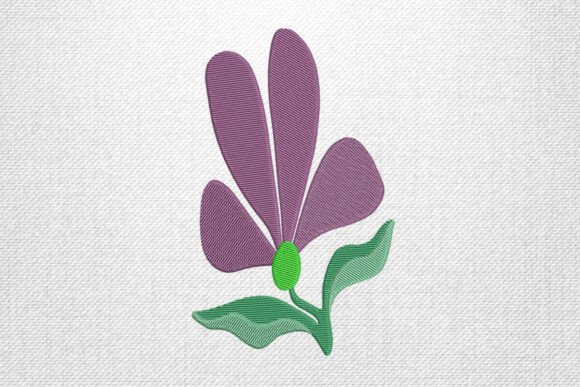
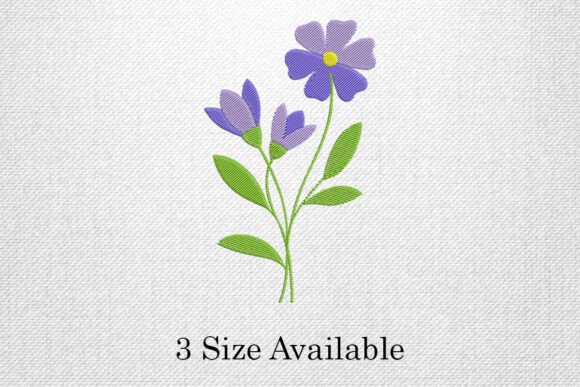
As an embroidery designer who’s tested hundreds of floral motifs for personalized gift shops, I’ll say it plainly: Purple Wildflower Bloom lands with quiet confidence. It doesn’t shout—it breathes. The moment I loaded the embroidery file into my software, I felt its gentle rhythm: layered petals, subtle stem curves, and a loose, organic silhouette that avoids stiff symmetry. This isn’t a botanical chart or a hyper-realistic bloom—it’s a hand-drawn *feeling*, translated into stitch. It reads as romantic but grounded, elegant but approachable, timeless without being dated. For customers seeking meaning over flash—new parents choosing nursery decor, couples selecting wedding keepsakes, or friends gifting a handmade pillow cover after a loss—Purple Wildflower Bloom offers emotional resonance before a single thread is cut.
Where It Shines: Real-Life Personalized Gift Applications
This design excels where sentiment meets surface. On a 100% cotton baby blanket? Absolutely. Its moderate scale and open stitch layout prevent stiffness, letting the fabric drape softly while holding detail. As baby embroidery on a onesie or burp cloth? Yes—but only on stable, pre-shrunk knit (more on that below). For wedding gifts, it transforms linen napkins, silk pillow covers, or ivory kitchen towels into heirloom-caliber tokens—especially when paired with monogrammed initials in a delicate script nearby. Etsy sellers will love how effortlessly it elevates a plain canvas tote into a curated, boutique-style product. And for craft fairs? Stitch it onto tea towels with contrasting lavender thread, then photograph it beside dried lavender and ceramic mugs—the warmth reads instantly.
It also works beautifully for small shop products that rely on perceived quality: embroidered aprons for bakeries, custom blanket embroidery for new grandparents, or even subtle pillow cover accents for minimalist nurseries. Because it belongs to the Single Flowers Plants category—not a bouquet or garden scene—it invites focus. That makes it ideal for digital embroidery file listings where buyers want clean, singular impact rather than complex layering.
Where to Proceed Thoughtfully
Like any thoughtful design, Purple Wildflower Bloom asks for intention—not limitation. Its charm lies in delicacy, so avoid pushing it into contexts where clarity or durability must override subtlety. Don’t place it on thick terry cloth towels unless you’re willing to test stabilizer combinations extensively; dense pile swallows fine stem details. Skip stretchy baby bodysuits unless you’ve confirmed the stitch density allows for recovery—tight tension + knit fabric = puckering. Curved surfaces like mugs or rounded pillow inserts require careful hooping and possibly repositioning; always run a printable mockup first. And on dark fabric? Test thread colors thoroughly—soft lilac or heather gray may disappear where deep plum or charcoal thread sings.
Also: avoid pairing it with ultra-thin fonts or tiny lettering in the same hoop. Its organic flow thrives when given breathing room. If your customer requests “Purple Wildflower Bloom + name + birth date” all in one hoop, consider separating elements across locations (bloom on front, text on hem) instead of compressing them.
Why It Elevates Giftability—and Customer Trust
Here’s what I’ve observed across five years of selling custom embroidery: designs like Purple Wildflower Bloom subtly raise perceived value. They signal care—not just in execution, but in curation. When a buyer sees this bloom on an Etsy listing for a personalized gift, they don’t just see stitching; they see intentionality. That builds trust. It tells them, “This shop chooses meaning over mass production.” Photographed well—on natural light, against linen or raw wood—it performs strongly in social feeds and email campaigns. Buyers linger. They imagine it in their home, on their child, beside their wedding bed. That emotional connection directly fuels engagement, repeat orders, and word-of-mouth referrals.
Practical Embroidery Notes You Can’t Skip
Before stitching your first customer order, do these six things:
- Test on scrap fabric that matches your final product—same weight, weave, and pre-wash status.
- Check thread color contrast on both light and dark fabric mockups. Purple tones shift dramatically under different lighting.
- Confirm hoop size compatibility with your machine and intended item (e.g., a 4x4 hoop won’t fit most pillow covers center-front without re-hooping).
- Review stitch density—if it feels heavy for lightweight cotton or baby items, adjust underlay or reduce fill density slightly.
- Use appropriate stabilizer: medium-weight cutaway for knits, tear-away for stable wovens, and fusible + tear-away for textured fabrics like toweling.
- Verify commercial licensing before selling finished products. Since this is a machine embroidery design marketed for T-shirts, hoodies, and pillows, confirm whether your license permits resale of physical goods—not just digital files.
Finally, inspect every finished piece closely: Are petal tips crisp? Does the stem taper cleanly? Does the overall shape hold its soft asymmetry—or did tension pull it sideways? These micro-checks separate good embroidery from unforgettable handmade product.
A Design That Grows With Your Business
Purple Wildflower Bloom isn’t just another embroidery file. It’s a quiet collaborator—supporting baby embroidery with tenderness, wedding gifts with grace, and everyday handmade products with authenticity. Whether you're an Etsy seller launching your first digital embroidery file collection, a small shop owner curating personalized gift bundles, or a craft fair vendor building seasonal collections, this design adapts without losing its voice. It reminds us that sometimes, the most powerful personalized gift isn’t loud or flashy—it’s a single, softly stitched bloom, chosen because it felt like home.